Graveyard Keeper II blends cemetery management with undead strategy
Graveyard Keeper II, by Lazy Bear Games, is a crafting RPG about managing a medieval cemetery and expanding influence. The game asks players to balance burial duties with town restoration while navigating narrative beats and resource systems. It pairs graveyard upkeep with combat, gear crafting, and large-scale automation across an expanded map. Players who enjoy dark humor, pixel-art management RPGs and patient, systems-driven progression get the most from this experience.
What kind of game is Graveyard Keeper II?
This sequel presents a narrative-driven crafting RPG that frames player goals around cemetery stewardship and urban influence, described as grotesque and unhinged. The core loop mixes resource collection, crafting, and management with story beats, and the scope grows into city-scale play. Expect a blend of management and role-playing, where decisions about production and town relationships shape how the settlement recovers from an undead outbreak.
How does leading an undead force alter the management loop?
Combat and army leadership integrate directly with crafting and progression, asking players to prepare equipment and deploy a party to reclaim territory. Practical mechanics tied to that loop include:
- crafting armor and weapons for undead units
- organizing a party to clear zombie hordes
- liberating new districts to unlock further production opportunities
What does the game look and sound like?
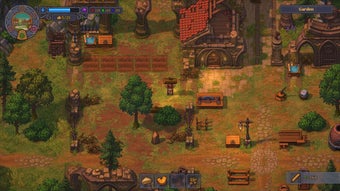
The title carries the developer’s signature pixel-art aesthetic and dark humor, with grotesque characters and twisted writing anchoring the tone. Audio and atmosphere support that mood, and the new city map makes traversal across a much larger world more manageable. The presentation leans into macabre comedy, which frames otherwise routine systems as part of a deliberately strange, often satirical setting.
Is it hard to get started and what keeps you coming back?
Progression scales from simple graveyard tasks to complex production lines that rely on zombie-based labor, so playtime shifts into persistent, long-form projects. The developer’s catalogue notes a tendency toward grindy management systems, which explains why automation and large-scale rebuilding dominate later stages. Replay value comes from expanded exploration and multiple town districts, rewarding players who enjoy extended campaigns rather than bite-sized sessions.
A strong pick for patient, systems-focused players
Graveyard Keeper II is a fitting choice for players who like long-form, systems-oriented RPGs framed by dark humor. Its paced progression rewards commitment but favors extended play sessions, which reduces appeal for those seeking quick, pick-up games. For anyone ready to settle into a persistent project with macabre flavour and careful planning, it offers an absorbing campaign experience.
.png)